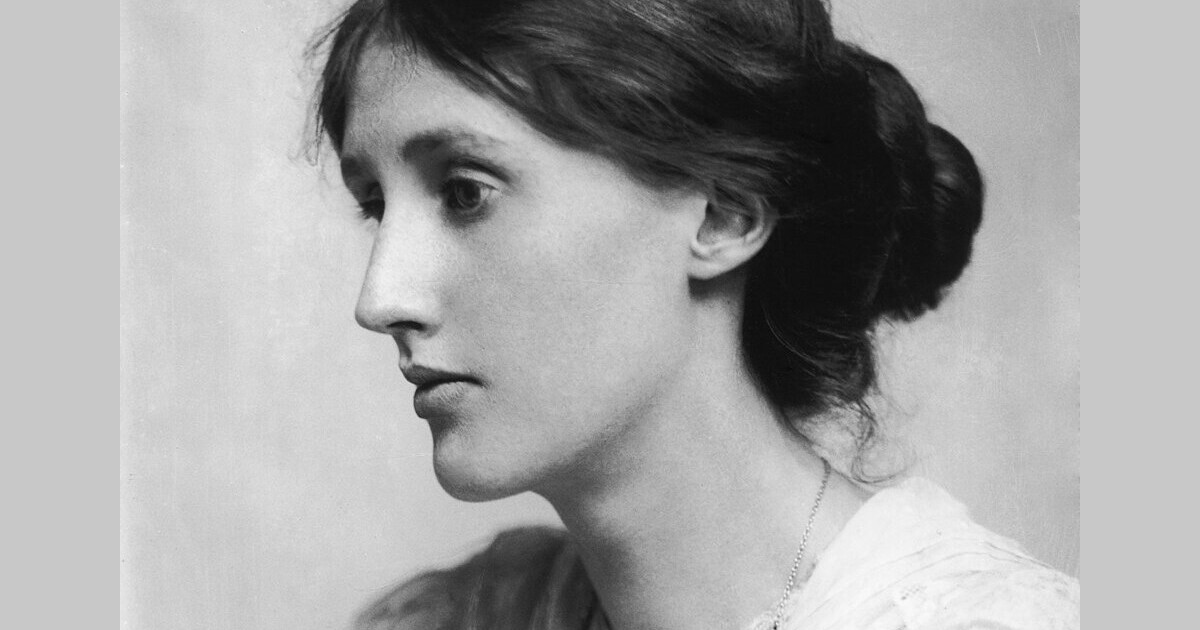
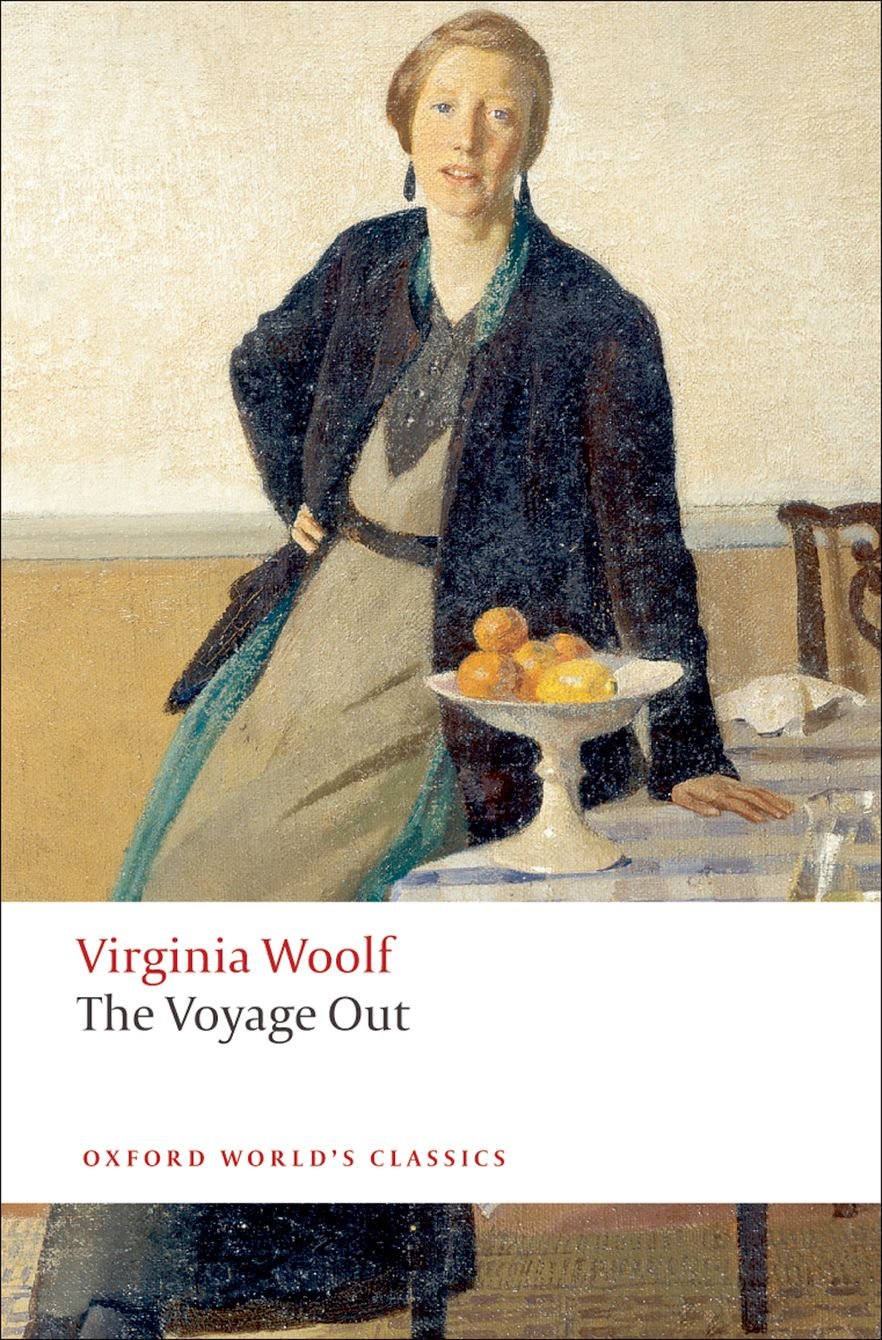
My first exposure to Virginia Woolf’s first novel was an excerpt read for a work assignment: a young Edwardian girl drifting mentally and physically in the opening days of a lengthy maritime journey. So when I committed to reading the whole novel two years later, I expected to spend the whole novel bobbing through the waves. I’d been had. The boating expedition ostensibly referenced in the title, The Voyage Out, ends a quarter of the way through the 437-page narrative, and its characters remain landlocked for the duration. Woolf was more interested in an experience at once more particular and more universal: the voyage out of the self and into relationship with others. Woolf portrays this voyage as perilous and its destination as enticing but ultimately inaccessible.
“What one saw and felt but did not talk about”
This focus on the unattainability of authentic human connection is in part a critique of Edwardian English society. The book’s protagonist, Rachel Vinrace, is a 24-year-old woman with the life experience and comprehension of an early adolescent. While she has been exposed to certain touchstones of European culture, such as Shakespeare, Austen, and Wagner, her guardians and educators—primarily men—are more interested in protecting her from the details of life they consider sordid than in preparing her for adulthood. She observes the emotional incompetence of her elders and instinctively finds her inherited culture absurd, preferring to withdraw into the comfortingly nonverbal realm of classical music. She complains that “nobody ever said a thing they meant, or ever talked of a feeling they felt,” while intuiting that reality itself is defined by “what one saw and felt but did not talk about.”
No Division, Then Far Away
Rachel’s perspective is echoed by her love interest, an aspiring novelist whose latest effort is titled Silence, or The Things People Don’t Say. This young author, Terence Hewet, proves a spiritual match for Rachel despite their seeming inability to surmount the communicative inhibitions that plague their fellow countrymen. Their mutual attraction fuels chapters of unacknowledged obsession, plunging Rachel into manic depressive cycles that probably reflect those famously experienced by Woolf herself. Even after Rachel and Terence finally unite as a couple, their attempts to connect meaningfully alternate between euphoria and futility. The relationship is only consummated through conversation. When they stop talking, their feeling of connection is painfully interrupted: “They remained uncomfortably apart; drawn so close together, as she spoke, that there seemed no division between them, and the next moment separate and far away again.”
Only Connect
This thematic emphasis on the importance of genuine human communion might be familiar to readers of Woolf’s friend and fellow Edwardian bard, E.M. Forster. His dictum “Only Connect” was a central theme of his masterpieces Howards End, in which emotionally fluent middle-class women struggle to comprehend stunted upper-crust men, and A Passage to India, in which British verbal acumen is reduced to nonsense during a visit to India’s Marabar Caves. Forster was a fan of The Voyage Out (“here at last is a book which attains unity as surely as Wuthering Heights), though he rightly observed that Woolf’s four leading characters lacked the psychological complexity achieved by a Dostoyevsky. Rachel’s characterization, for example, is convincing enough but the reader never quite escapes the sense that she is as much symbol as flesh-and-blood human.
Symbolism also trumps humanity in Woolf’s romanticized depiction of South American natives, who are nevertheless described with uncomfortable frequency as “savages.” Woolf never actually visited South America, a fact Forster probably knew when he praised her for creating “a South America not found on any map and reached by a boat which would not float on any sea, an America whose spiritual boundaries touch Xanadu and Atlantis.” For Woolf, the natives are not so much people as foils for her English characters’ difficulty with authentic communication. On a journey into an unspecified jungle, her narrator tells us that the British “felt themselves treading cumbrously like tight-coated soldiers among these soft instinctive people” from whom the hapless Europeans are “removed … far, far beyond the plunge of speech.”
The Dalloway Prequel
However, if Woolf’s character development is not beyond critique, her creations movingly convey the modern individual’s longing for and lack of access to meaningful connection. As if drawn from the dusty attic family photo albums of Nick Hornby characters, they substitute shared appreciation of art and literature for intimacy. This results in some delightful exchanges and allusions, particularly from the acerbic St John Hirst, who was reportedly inspired by the author Lytton Strachey, and Clarissa Dalloway, whose engaging discussions of art and literature, of course, later inspired a Woolf novel of her own. Mrs. Dalloway is of course a far braver and more fully realized replica of human thought than The Voyage Out, but I liked Clarissa better on the boat. Less obsessive social butterfly, more posh culture analyst. The connective tissue is the pained communicative distance in both novels. In the debut, she is obliviously charming while her husband impulsively two-times her. In the celebrated pseudo-sequel, she stifles inchoate longing for her female almost-crush.
Celebrating Little Victories
Ultimately, The Voyage Out does not condescend to its communicatively inhibited inhabitants. Instead, she celebrates the little victories they manage to achieve. Rachel and Terence’s affair is compelling throughout. We also hear the author’s voice in the response of Rachel’s aunt, Helen, to her niece’s description of their community’s interactions as “aimless, trivial, meaningless.” Rather than belittling her English companions, Helen reflects on “the little jokes, the chatter, the inanities of the afternoon,” concluding that “underneath the likings and spites, the comings together and partings, great things were happening—terrible because they were so great.”