“An artist once told me that she no longer wanted to make art that looked like art. I was discovering that I no longer wanted to write novels that read like novels. Instead of shapeliness and disguise, I wanted a form that allowed for formlessness and mess. It occurred to me that one way to find that form might be to tell the truth.” Michelle de Kretser, Theory & Practice
Thirty years ago, I resolved to submit a play for a college competition a few days before the deadline. “Write what you know” is always dubious advice for writers who don’t yet know anything, so I opted for the common beginner’s gambit of writing about not having anything to write about. In The Tragic Fall of Rufus the Great, a Greek Chorus heralds the birth of a boy destined for artistic greatness, but the world has finally run out of unique combinations of words. The boy comes of age and pours heart and soul into a dramatic masterpiece that turns out to be a word-for-word replica of Death of a Salesman. “There is nothing new under the sun,” I concluded, borrowing a 2,500-year-old Biblical cliché that was probably already a cliché when the Preacher patted himself on the back for writing it in Ecclesiastes.
The next spring, I saw Mighty Aphrodite in a second-run movie theater and realized Woody Allen had been working on the same idea, right down to the vaunted newborn and the satirical Greek Chorus. My eagerness to have my play workshopped dissipated permanently as I realized the world would assume I’d heisted it wholesale from Woody. “Nothing new,” indeed.
The buyer should always beware claims of new forms. Is there any possible form of fiction that fiction hasn’t already taken? “The novel was triumphant at the middle of the [19th] century,” says critic James Wood in his book The Broken Estate, “and there is a sense in which Melville, Flaubert, and Gogol, all of them writing roughly contemporaneously, were poets who wanted to make the novel a genre that could consume all others and then perform all their functions at once—a stomach of genres, digesting satire, poetry, epic, the historical novel, realism, and fable.” Since then, we have had the shifting interiority of Virginia Woolf, the arcane allusivity of James Joyce, the maximalist floridity of Marcel Proust, the self-referential disclosure of John Barth, the duplicitous gamesmanship of Vladimir Nabokov. So what could possibly be left for the novel to do that is new?
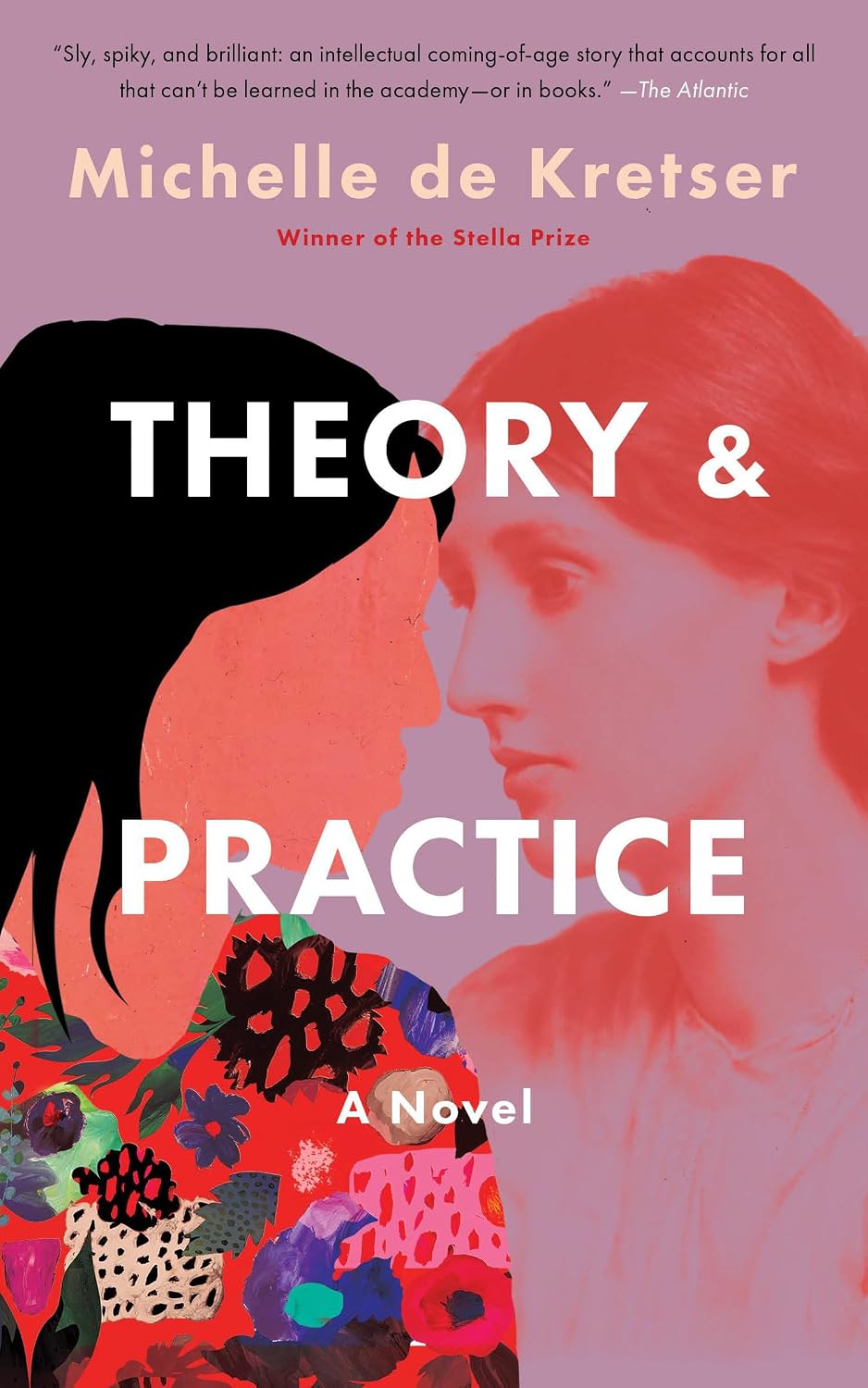
Still, when I first read the promotional blurb for Theory & Practice, winner of Australia’s 2025 Stella Prize, I was so intrigued by its concept that I paid Evil Billionaire Jeff Bezos more than I would have paid my beloved ThriftBooks just so the book would arrive on my doorstep the next day. This is a doorstep that receives so many books that my mailman incredulously asked if I had a nine-to-five. (True story.) The hook that helped de Kretser jump the line of my teetering TBR* was its promised fusion of novel, memoir, and critical analysis of Virginia Woolf. That struck me as a genuine formal innovation.
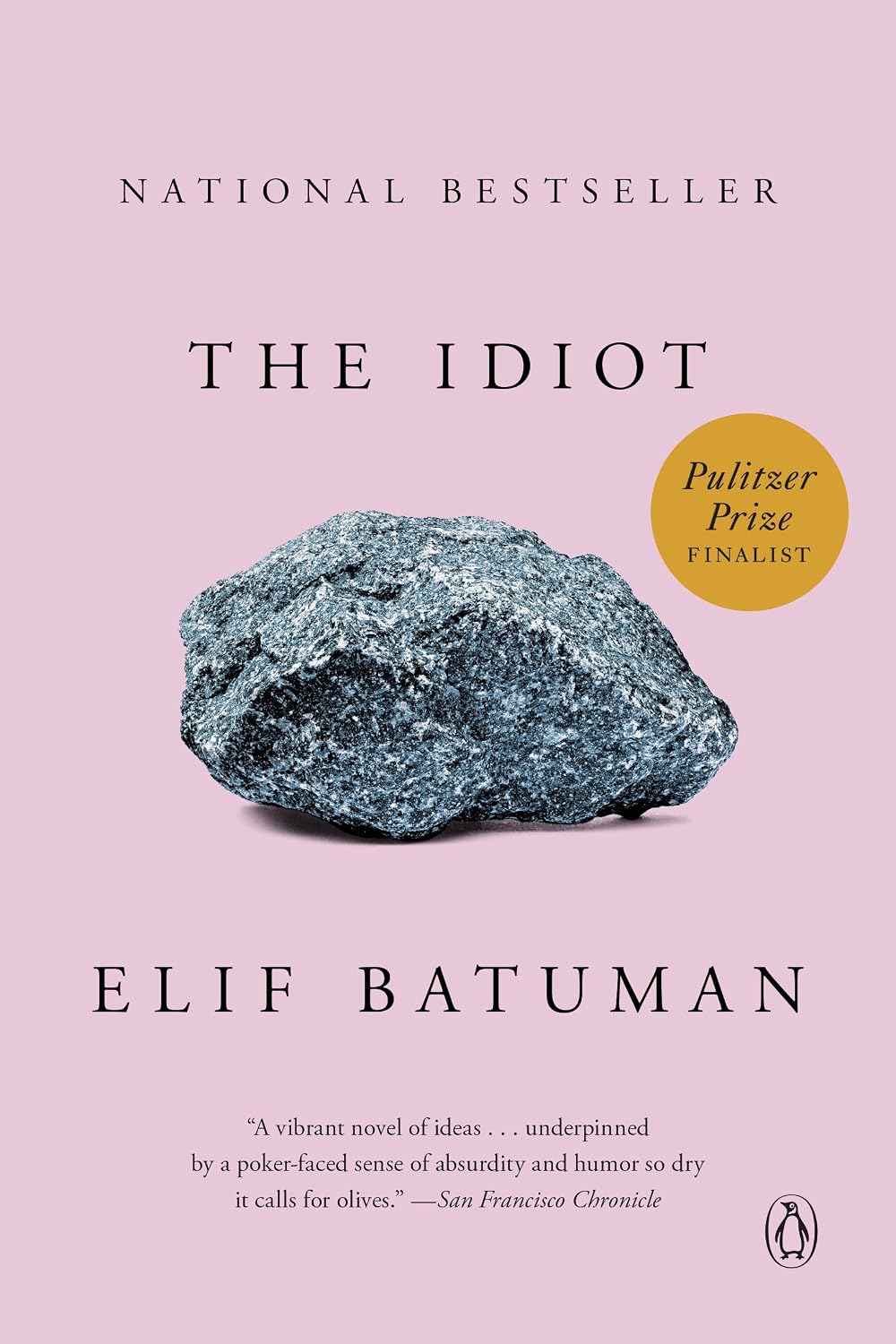
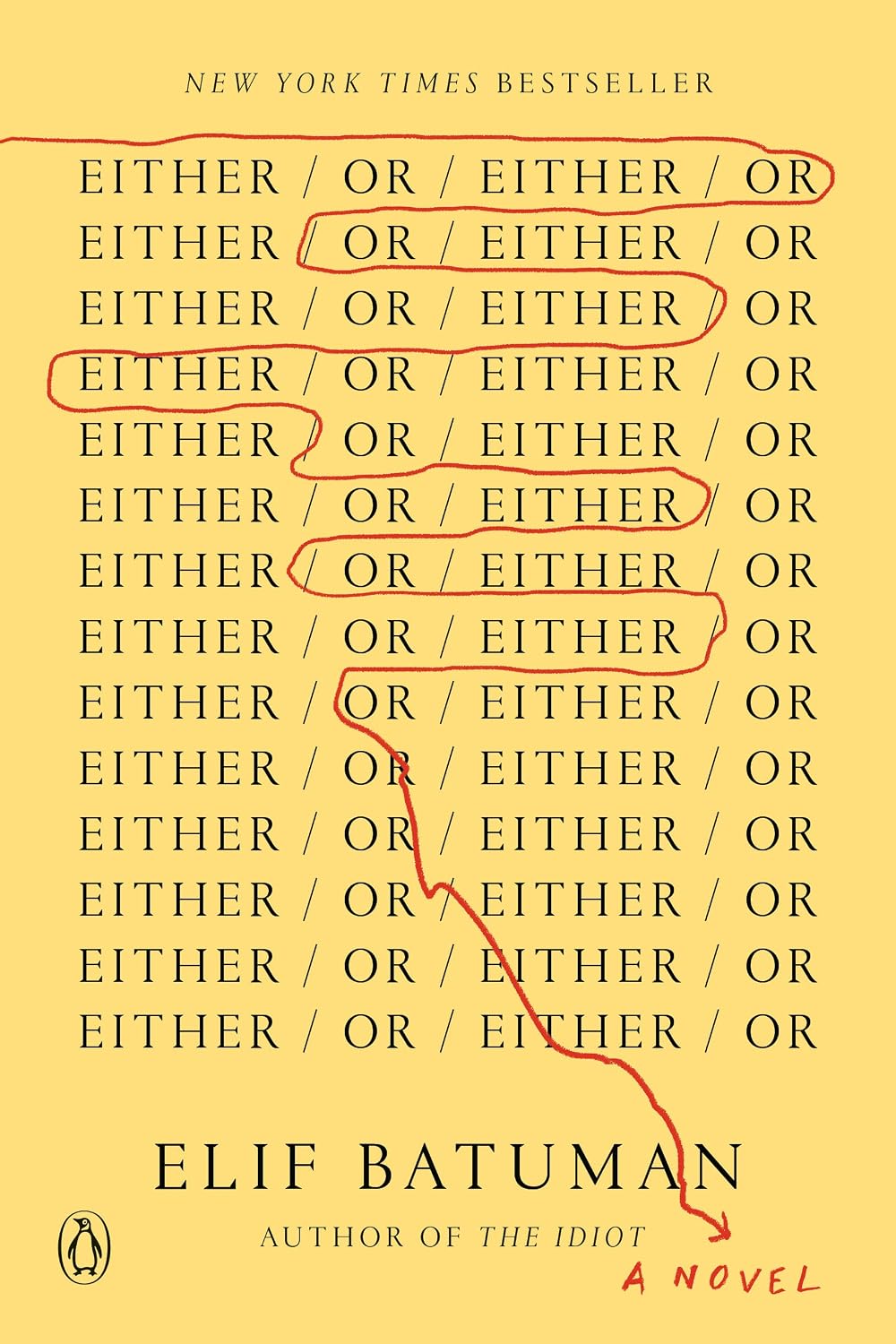
But as I worked my way through the slender but compelling narrative, I couldn’t shake the feeling that I had encountered its innovations somewhere before. Finally, it struck me like a pronouncement from a sagacious Greek Chorus: Elif Batuman. The chunked confessional episodes, the coming-of-age romance, the higher ed nostalgia, even the genre-defying insights into classical literature, all bore a distinct resemblance to Harvard Russian Lit alum Elif Batuman’s debut novel The Idiot (a Pulitzer finalist) and its sequel Either/Or. Both authors aspire to reinvent the novel. Is either successful, or do they both fall victim to the timeless intonations of Ecclesiastes and my undergraduate stab at a one-act comedy?
* TBR = To Be Read
The Fiction-Memoir Hybrid
Both Batuman and de Kretser seek to invigorate the novel by blending memoir seamlessly into a fictional context. On a broad level, their stories follow a recognizable pattern, that of the Bildungsroman, or coming of age novel. In such a work, states the Oxford Research Encyclopedia of Literature, “the plot unfolds through the narrative of a young person’s development and formation that ideally results in ’maturity’—a rather contested concept, which is traditionally understood as the harmonious integration of personal aspirations and the demands of the social.” Both books feature protagonists seeking maturation through epiphanic romance but for whom no stake is higher than writerly ambition.
The novels are strikingly similar in plot and structure, but wildly divergent in scale. De Kretser’s Sri Lankan heroine, innominate but scornful of her name’s ubiquity (could it be Michelle?), learns the ropes of 1986◆Michelle de Kretser starts a doctoral program at the University of Melbourne Melbourne postgrad life in 175 pages. Batuman’s Turkish American ingenue Selin Karadağ, a 1995◆Elif Batuman starts her freshman year at Harvard University matriculant to Harvard’s literature program, takes two novels, two scholastic years, and 770 pages to achieve maturation. But both characters flit from day to day in chapterless episodes, single paragraphs to several pages in length, narratively aimless but for each character’s burgeoning attraction to an unavailable cad with a serious girlfriend and an incongruous readiness to flirt.
The Idiot, named after Fyodor Dostoevsky’s 1868 panegyric to naïveté, reads like an embarrassingly earnest freshman diary. Selin is bright, but every insight is raw and untested, dimly apprehended through the opaque scrim of inexperience. She soaks in education from every avenue, dormmates and Dostoevsky, fellowship and Fellini. Selin lacks confidence in every area but one: she has been an accomplished personal essayist since high school.
By Either/Or, which is also the title of Søren Kierkegaard’s contemplation of ethics and aesthetics, she has become bold to the point of reckless, hellbent on dispensing with her inconvenient virginity. Her intellectual takeaway runs along these lines:
“The aesthetic life involved seducing and abandoning young girls and making them go crazy. This was what I had learned from books. There was a problem of application: what did you do if you were a young girl? … What were you supposed to do now: seduce and abandon men? Was that what feminism had made possible? Something about the idea didn’t feel aesthetic. Just think of the angry, complaining men.” Elif Batuman, Either/Or
The protagonist of Theory & Practice hits page one at the Either/Or end of the intellectual and sexual precocity spectrum. At school, she reveres Virginia Woolf’s message of gender equality while condemning her perceived antisemitism and colonial snobbery. In her dating life, she is defiantly invested in a man who claims to be in a “deconstructed relationship.” Her takeaway echoes Selin’s:
[I was struck] by the tremendous silencing power of shame. To whom could we confess our treacherous, rivalrous, trite, uncool, unfeminist feelings without shame? Shame could transform female solidarity into a scold’s bridle. It could ensure that a philosophy designed to free us set a weight on our tongues.
Michelle de Kretser, Theory & Practice
Both authors are expert personal essayists, and they’re not afraid to apply their skill to a novel. De Kretser’s expertise in this form informs her work as a university professor. Batuman’s is expressed in New Yorker articles and essay compilations. But is this a formal innovation, as promised in de Kretser’s pledge to “tell the truth”?
Not really. Both books are apparently heavily autobiographical, but the reader only recognizes them as memoir if they are exposed to outside information. In a hermetic reading, the claim to fiction/non-fiction hybridity is essentially bravado. The anecdotes may borrow the authentic ring of truth, but the books rely on the same narrative artifices that all novels employ. “Fiction is of course a form of lying,” wrote James Wood in his book The Broken Estate. “Fiction requests belief from us, but we can choose not to believe at any moment. … Our belief is itself metaphorical—it only resembles actual belief, and is therefore never wholly belief.” Even with certainty that an undisclosed portion of a novel actually took place in the life of its author, fiction’s essential contract remains unchanged.
The Critic as Novelist
The weightier claim to innovation is that of a novel that weaves academic literary analysis into its story. The extent to which Batuman attempts this is one of the greatest pleasures of her novels. But while the books teem with critical interpretations, her voice is one of sophomoric cogitation rather than genuine academic rigor. In one passage, Selin discusses Dostoevsky’s Crime and Punishment with the boy she is crushing on:
He invents these supposedly complicated problems and then gets so worked up about them—like, it’s hell, it’s intolerable humiliation, it’s the mathematically highest point of abasement. But to me, none of those things seem particularly hellish or humiliating or complicated. When I can’t get worked up myself, I feel embarrassed. And tired. … It’s like he does this shoddy, depressing thing, killing an old lady—and instead of shoddy and depressing, it’s supposed to be an earthshaking philosophical crisis.” Elif Batuman, The Idiot
In another, she reflects on a childhood memory from Swann’s Way by Marcel Proust:
The episode itself, about baby Proust’s anguish on nights when his parents had dinner guests, was harrowing. I didn’t like to admit it, but I was pretty sure that I had felt the same despair when my parents went to dinner parties. Being left at night for a party was so much worse than being left in the daytime for work; what was, for you, a cause of desperation, was for them an occasion for dress-up and celebration. But why did Proust have to keep thinking about it? Why couldn’t he write a book about something else? Elif Batuman, Either/Or
The goal of these passages is to illuminate characterization. Batuman is not attempting to get an A on a term paper.
What makes de Kretser’s book thrilling is that her ideas about Virginia Woolf are part of the novel’s larger argument. She is interested in the relationship between intellectual framework and lived experience: theory and practice. Her examination of Woolf’s casual antisemitism despite her marriage to a Jewish man reveals that the feminist icon’s theoretical heroism does not always convert to practical morality. The narrator is not just idly speculating about Woolf’s shortcomings. She is incorporating her thoughts into a verdict on her own behavior. De Kretser also draws parallels between the narrator’s experience of sexual callousness and the horrors of colonialism, expressed in a homework-inspired passage about Israeli/Palestinian relations in 1986.
At times, de Kretser’s critical insights are entertainingly well developed. Forty pages from the book’s conclusion, she treats us to a delightfully sophisticated paper titled “Virginia Woolf’s Tea” that explores Woolf’s own attempt◆Virginia Woolf starts writing The Years, blending essays and fiction at formal innovation in The Years. We are told that Woolf intended that book to be a critical and narrative hybrid, but the project was abandoned in despair. De Kretser’s fictional student suggests the failure of The Years resulted directly from Woolf’s moral failings:
I contrasted the modernising trajectory of Woolf’s Englishwomen and the ongoing immiseration of the tea pluckers. The former was made possible by the latter, by the exploitative colonial practices that underwrote British progress and wealth. I told my audience that Woolf had set out to find a fresh form in The Years, but had later abandoned the attempt. A fresh form represents a desire to see the world differently, but Woolf hadn’t managed to do so. The Years remained enclosed in the powerful fiction that the self-fulfilment of British women transcended the imperialism that enabled it. That was The Story Under The Story in The Years. Michelle de Kretser, Theory & Practice
The narrator’s criticism here is not just character work, as are Selin’s hot takes. De Kretser is introducing authentic textual insight, backed by historical research. The trouble is, in this most pivotal instance at least, that the critical text is not actually integrated. De Kretser narrates her paper rather than excerpting it. That was disappointing.
The climax of Either/Or ends up modeling a more seamless integration of the two modes of writing. That book starts with Selin’s confession that skill as an essayist has never translated to imagination. She is inept at inventing stories. But in the book’s conclusion, she turns a fascinating critique of Henry James’s The Portrait of a Lady and Gustave Flaubert’s Madame Bovary into compelling narrative:
Near the beginning of The Portrait of a Lady, there was mention of an aunt who kept telling people that Isabel was writing a book. In fact, Henry James said, Isabel was not and never had been writing a book. She “had no desire to be an authoress,” “no talent for expression,” and “none of the consciousness of genius,” having only “a general idea that people were right when they treated her as if she were rather superior.” It was one of the few places where Henry James was mean about Isabel. Well, it made sense. If she could write a book, he would be out of a job. That’s why Madame Bovary had to be too dumb and banal to write Madame Bovary: so Flaubert could have a great humane moment where he said he was Madame Bovary. But I wasn’t dumb or banal, and I lived in the future. Nobody was going to trick me into marrying some loser, and even if they did, I would write the goddamn book myself. Elif Batuman, Either/Or
Batuman doesn’t present this passage as criticism cum fiction. The literary analysis is fully employed as a storytelling device. The criticism catalyzes character growth. The Idiot and Either/Or are sometimes frustrating in their capacious drift through Selin’s undergraduate experience, but I have no notes on Batuman’s propulsive, criticism-fueled conclusion.
New Forms?
Selin’s epiphany about The Portrait of a Lady turns into a manifesto for her own experience based fiction. She reads James’s preface to that book, which uses the image of a “wind-blown germ” to explain how ideas for stories drift into his life. She decides that she can turn this insight into a new form of fiction:
Nowhere in the preface did Henry James say why he hadn’t found his own life interesting enough to write about. I tried to remember what I knew about Henry James’s life. I was pretty sure I had read that he was gay. Probably being gay had been illegal, and he had been ashamed. So his problem, like Isabel’s, was that he had been born too soon. That was sad, but it didn’t really change anything. Like, for whatever reason, Henry James had had to do stuff like find a “wind-blown germ” and then forget how he had found it, so he wouldn’t feel like he was stealing. But I was more fortunate. I was going to remember, or discover, where everything came from. I was going to do the subtle, monstrous thing where you figured out what you were doing, and why. Elif Batuman, Either/Or
The reader of Either/Or understands that Selin’s new form is the book in their hands, just as audiences of The Tragic Fall of Rufus the Great understood that they were watching Rufus’s failed attempt at a dramatic masterpiece. This returns us to our initial inquiry: Has Batuman earned the claim to a new form? Has de Kretser?
I don’t think either author has cleared that bar. Batuman’s use of James and Flaubert in her climactic revelation is riveting narrative with real analytical heft, but the voice is consistent with the narration throughout the two novels. Selin is becoming a more insightful critic, but her form of discussing literature remains that of a storyteller, not an academic. She has not actually changed her mode of writing.
De Kretser’s decision to present a summary of her paper rather than excerpts of it undermines her claim to hybrid prose. I would have preferred it if she had interwoven her critical voice with her narrative voice, similar to the way that A.S. Byatt weaves Victorian poetry into 20th-century narrative in Possession. It is not necessary for the essayistic content to be indistinguishable from the story, the way that Benjamín Labatut’s non-fiction melts invisibly into his fiction. But it seems to me a more original use of critical writing would be for the two forms to be rendered adjacently in their native idioms, not in a character’s voice. Having characters discuss literature is not a new form. Selin knows that; she’s read Proust.
Neither author has created a novel that doesn’t read like a novel or reinvented a centuries-old art form. But the willingness of both authors to merge their own stories with literary insight and narrative imagination makes for three exceptional reading experiences. Their dramatic masterpieces may not be wholly original, but they do not turn out to be just another edition of Death of a Salesman.
Sadie Seroxcat, editor of Medium’s Counter Arts publication, generously selected this essay for publication in its Literature section starting Sunday August 21, 2026. She has my thanks.