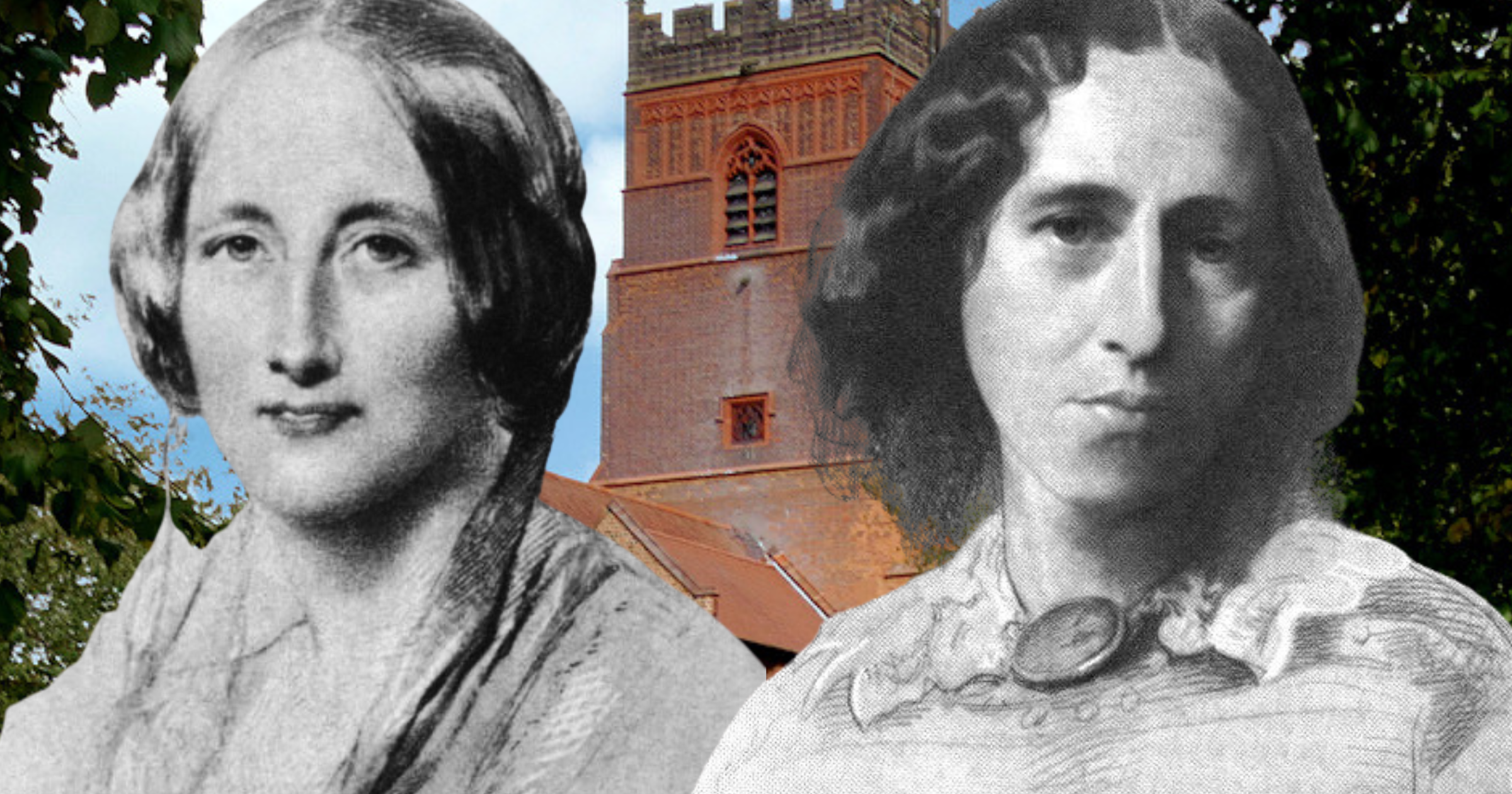


In a book of heavily shared silences, of casual lies reflexively uttered in defense of festering secrets, the most extraordinary sequence in Douglas Stuart’s John of John is the bar scene between John-Calum and his almost-uncle Innes. The odd couple, each of whom suspects the other of closet homosexuality, poke furtively at the elaborate invisible walls between them, to explore the improbability that trust could unlock their respective internal prisons.
a h-aon / one
Sipping sambuca in a noisy mainland pub, the pair have made a fleeting escape from their boggy Scottish island, which remains in the late 1990s a barren sanctuary for a stagnant, best-forgotten past. Cal is a recent college graduate whose nascent luminosity has not yet been extinguished by his smothering surroundings. He is almost imperceptibly flirtatious with his father’s best friend Innes, a gentle farmer in his late forties who is compromised by entropic desperation despite eyes that still seem to Cal to be “lit from behind.” The two of them cagily probe which secrets can be sundered and which must be protected.
Innes asks Cal why he came home to the island after college. Cal’s answer is “I was scared.” He’d never been so alone, so responsible for himself. By way of explanation, Cal tells a story that assaults me from the page with a memory I hadn’t examined in years.
"I caught scabies in my second year. I came out in these itchy red sores and didn’t sleep for weeks. I finally plucked up the courage to tell my dad, to ask what it was and if I should go to hospital or not, and all my dad wanted to know was how I caught it." He chuckled sourly. "I caught it from someone in the library. Sad, right?" He took a draw and held the smoke inside before expelling it in a series of hoops. "I learnt I could never tell him about my actual life. I think that’s why I’m in so much debt. I just wish I had someone to phone, someone to ask.”
Innes made a small murmur of understanding. “Everyone says it’s harder to leave. But it’s much harder to stay.”
Innes’s aphorism is a striking diagnosis of their mutual affliction. It is the core of Stuart’s bitterly pleasurable novel, a hushed and irreverent ode to emotional paralysis that has mounted a formidable 2026 Booker Prize candidacy. Staying on the Isle of Harris is gradually killing both Cal and Innes, but it is also the most laborious of their binary options. Leaving brings agonizing finality, but if done correctly it is a single swing of the blade. You only have to do it once.
diagnosis / breithneachadh
The wait in my pediatrician’s office would be excruciating even without the gradually mounting itch. I am a twenty-year-old man, but I need to get a rash treated, and it’s been years since I saw a primary care physician. Already I have declined lollipops and been branded with superhero band-aids. I settle into a chair, and my knees rise to my shoulders. To get here, I’d had to tell my parents why. The itch is embarrassing enough. There’s no way I’ll tell them that I’ve already been told it is a mite infestation spread through close skin-to-skin contact. My girlfriend had caught it in a squalid dorm, and the shared discomfort, coupled with empathy for her intense aerophobia on the eve of a semester in London, foreclosed a decisive separation at the start of our junior year in college. This was the third consecutive fall that an “open relationship” seemed easier than a clean break.
“You have scabies,” the doctor tells me.
He tells me I should warn my girlfriend that she might be infected.
“She knows, and anyway she’s in London now.”
“But first, she left you with a going-away present,” he surmises. An awkward pause. “Well. Help yourself to a lolly at the desk.”
a dhà / two
The reason everyone says it’s harder to leave is that the longer you stay, the more impossible leaving seems. The islanders are bound by financial reality; most of Cal’s neighbors “paid their rents with little hope of ever owning their homes outright.” They are bound by traditions that limit educational opportunities and train them solely for the trades of the past: farming, shepherding, weaving with Industrial Revolution technology. Cal is the first in his family to go to college, and some islanders, like his childhood friend Doll, resent him for it.
"Doll . . . have I done something to annoy you?"
"You’ve done nothing. Nothing at all. You upped and left as it suited you. And then you show up expecting everything to be the same." He flicked the half-smoked cigarette into the sea. "So forgive us, college boy, if no one has the heart to throw a cèilidh."
Every character in John of John is chronically confronted with one question: How can they escape? Cal is ostensibly there to help his father, but is he even needed? “My father makes all kinds of excuses about why he wanted me home,” Cal tells Innes. “But let’s be honest, he can manage the croft by himself, he would rather manage by himself. He’s lonely, Innes. And he doesn’t know how to admit that.” Cal also returned to help his ailing grandmother, but she’s stealing from the church to fund his departure.
The money circulates through their little community like a mite infestation—each character professes a desire to leave, but when the cash comes round, each finds a nobler desire to pass opportunity on to his or her neighbor. Cal gives the money to his one-time “beard” Isla, who bears the illegitimate child everyone assumes is his. She accepts but in the end she can’t pull the trigger. Her grieving mother needs her on the island. Only Doll, the cause of the mother’s grief, finds a way to escape his stultifying existence:
"The [official report] said Doll had the liver of a much older man, that it was all burnt and black and fatty. But he said that in the end, it wasn’t the drink that killed him. He drowned."
"Isla, you can’t drown on dry land."...
"It can happen days after they swallow enough water. One woman drowned driving along the motorway, hours after being at the beach."
"But it was freezing. Why was he even in the sea?"
"Licky was saying maybe he wanted to drown himself. But honestly, I just think he was bored."
Doll’s tragic end grimly complicates Innes’s aphorism. Doll has been relieved of island drudgery, but did he leave or stay?
treatment / làimhseachadh
The treatment for scabies is a body wash meant to kill the mites in one immersive deployment. I am terrified that I will kill them only to be reinfected by a piece of clothing or my bedsheets. I hurl the bedding and every pair of jeans, every t-shirt, every sock, and all but one pair of underwear into the dormitory laundry machine and run upstairs to apply the prescription in the shower. But days go by, and the itch doesn’t stop. I lie awake every night trying not to scratch. In the bunk bed above me, my roommate is constantly scratching itches in his sleep. Letters from London arrive periodically. Affectionate, distant. Is she dating the guy she keeps talking about? It might be easier to meet new people if I knew what to say about her. It would be easier to meet new people if I didn’t have this constant itch. Several times I throw all my belongings into the laundry machine and run to the shower. The rash changes its appearance, transforming into dry blotches.
a trì / three
To leave might seem harder, but to stay is exhausting. Stuart’s islanders spend many pages looking for something to do to puncture the boredom. Doll self-medicates with liquor, and the strategy has increasing allure for Cal. The townspeople begin to lecture Cal about his drinking habit. He responds by taking ecstasy at a cèilidh (party) dominated by young people seeking to exhaust their sexual curiosity.
In John of John, sex is seldom a shared communicative bond. More often, it is two individuals quenching loneliness by downing bottles of sand. Cal and Doll have been pursuing momentary escape through sex for years.
It seemed to Cal that [Doll] felt better about the wickedness of it all if he pretended he was doing Cal some favour. If he pretended that they were only here because of the dirty things Cal wanted and that he was a big man, a good friend, to grant it to him even though at the end of it all, Cal was the one denied the pleasure of release. He was just a collection of replacement parts. A substitution for what Doll could not get. And so there was no way to begin with kisses, or with caresses, or with tender words. No way to be seen to be enjoying their bodies.
College-bound Isla’s future prospects dim with her pregnancy, a passionate concession to a mainland cad rationalized as one last fling before marrying a boring islander. Perhaps Cal’s healthiest hedges against loneliness are the “M4M” classified ads he takes out in city papers. He receives a friendly and sexy letter but spoils the opportunity by seeming too sexually desperate. “Cal,” reads the second letter, “I don’t think you’re what I am looking for. Wishing you all the best and that, Billy.”
If Cal’s coping mechanism is sex, John’s is faith. “I didn’t leave him, I left home,” Cal tells Innes in the bar. “And he left me first. He looked at me and he looked at Jesus and he chose Jesus.” Presbyterianism is the most effective barbed wire fence the island has at its disposal. Its rigid moralism is the iron fist that keeps the island in lockstep compliance. John’s highest self-concept is steeped in his austere piety as an elder in the church. But his fevered prayers rationalize his brutal abuse of Cal and mask the book’s most intensely guarded secret, a midpoint revelation that changes everything while changing nothing.
Many of the islanders, including Cal and John, are shepherds, but rather than lying down in green pastures or leading their flock beside still waters, these shepherds administer brutal castrations and decapitate newborn lambs with poor survival odds. “Thy rod and thy staff” cease to be an instrument of comfort. The Jesus who halted a stoning has left the island. In his place is a Presbyterian minister who shrugs off Isla and her unborn child as “two souls destined for damnation” even as he seeks to marry her off to Cal.
coping / a’ fulang
The open relationship never seems to convert to actual dating. On our first Christmas break from college, my girlfriend and I bonded one night over our respective flirtations with college peers, but morning brought jealous recriminations and regrets. Sophomore year, she began to crave the security of her Presbyterian upbringing, a lonely sentiment at her famously liberal liberal arts college but a constant imposition at my evangelical institution. She missed the consolation of religion; I was drowning in it. Soon, she was making campus visits at my school. But the conservative character of the school was increasingly an alienating burden to me. Like our relationship, it was a strained coupling that I lacked the courage to leave. Her mother seemed to sense this, pulling me aside during a family college visit to find out how I really felt. “We just want the best for both of you,” she said. Eventually we came to our collective senses: there would be no transfer. But as my junior year progresses, I find myself watching opportunities for new relationships on campus passing by with accelerating frequency. After a series of intense connections in overnight conversations, none of which materialize into anything lasting, my resolve strengthens. Christmas is coming, and leaving finally feels inevitable. The only question is whether there is anything real left to leave.
a ceithir / four
The care with which Stuart creates the setting of John of John is impressive, but he does not rely on painterly evocation of landscape to bring the Isle of Harris to life. Instead, location is vividly rendered through the culture of its inhabitants, through peat-fueled stasis alleviated by flashes of modernity. A copy of the opening volume of Marcel Proust—ironically belonging to John rather than Cal—slips from a vibrating dashboard. An abortive sex scene is scored to a hushed Nick Drake sunset. A cèilidh pulsates in full-on Chumbawamba desperation. This thorough sense of place reminded me of Colm Tóibín’s evocation of enervating small-town myopia in Long Island. That novel devoted a similar degree of care to its peripheral characters as it dramatized a partially severed relationship caught halfway between leaving and staying. But if I’ve ever read a novel that more beautifully straddled that pained dichotomy than John of John, I don’t know what it is.
Like Joni Mitchell, Cal has got the urge for going, but his must be suppressed. The funds Cal’s grandmother appropriated from the collection plate are long gone by winter and the chill invades his once buoyant spirit. “His father put all his faith in the Presbyterian penicillin,” Stuart’s narrator explains. “For whatever ailed you there was only one cure: work and prayer.” Cal obediently works himself into mindless submission. Now it is clear why Stuart began the book with an epigraph from George Eliot’s Silas Marner, who was a weaver, just like John and Cal: “Every man’s work, pursued steadily, tends in this way to become an end in itself, and so to bridge over the loveless chasms of his life.” The work merely roots the pain and leaves nothing planted for spring. The longer he stays, the more John-Calum morphs inexorably into John.
The book opens with a painful staying, as Cal ponders exile from urban acceptance. It closes with Innes’s sudden cleaving blow, a joyous defiance of John’s suffocating grip. Just as Cal was beginning to surrender to a Doll-like trajectory, Innes, who diagnosed the problem tersely with his aphorism in the portside bar, proves that it is never too late to leave and that staying is still the harder option. Cal finds a phone number for his first destination and ratifies his choice in a message dictated to a clerk: you have become the hope of us all.
cure / leigheas
Back home, I meet my girlfriend for a dread-inducing exchange of Christmas presents and semester stories. My firm extraction comes as a quietly expected surprise to her and a long-resisted scratch to me. The itch itself is left behind, too, in a Homeric return to the pediatrician. He scoldingly reveals that the rash is worse only because I’ve so often reapplied the body wash. The second time I used it, I was treating an infestation that was no longer present. The only reason I continued to itch was that my repeated attacks on my healthy skin conjured agonizing eczema.
Years later, after college, I will reunite with this girlfriend. And break up. And reunite and break up. Until we are in our thirties and the final break is far more painful than it ever should have been.
The treatment only works if you do it once.