Some authors construct worlds that are strikingly close to the world you inhabit. I ordered Elif Batuman’s The Idiot based on a plot blurb alone because furtive emails exchanged between flirtatious undergrads at the dawn of the internet age rang Gen X bells I hadn’t heard since rotary phones. Marilynne Robinson’s Gilead narrator, a frocked Iowan protestantagonist from the Eisenhower era who can’t order breakfast without quoting John Calvin, felt like family to a P.K. whose dad spent the 1950s shepherding a tiny Presbyterian flock in Paris, Missouri. Anton Chekhov was so locked into the human clockwork that he makes a reader who spends his days debugging software feel like he grew up in Yalta just after the emancipation of the serfs.
For me, Haruki Murakami has never been one of those authors. He is not the best writer I have reviewed, but he is the writer I have returned to most frequently during the last year. I finished 1Q84 in January and got as far as April before I felt compelled to revisit his notoriously unfamiliar world. In April, I read After Dark and got as far as August before I felt compelled to dive into Killing Commendatore. What is it about Murakami that has me tethered by an unusually short rope? I’ve grappled with that question in this space before and likely will again. Today, what is relevant is that I am not drawn to his remote planet out of a deep-seated desire to stare up at the sky from the bottom of a well (The Wind-Up Bird Chronicle). Or because I see myself reflected in metaphysical bad actors who decapitate kitties while cracking Puccini jokes (Kafka on the Shore). The point of Murakami is not the comfortable familiarity of his fiction. Even when Murakami zeroes in on the “realism” in “magical realism” (Norwegian Wood), a landlocked American like me thrills more to the novelty of his Tokyo settings than to the universality of his psychology. True, he is more likely to reference Charlie Parker than Gorō Yamaguchi, or John Ford than Yasujirō Ozu, but his Western cultural fluency is all the more enjoyable in his alien contexts.
I return to Murakami for his pleasurable strangeness, for the intentional dissonance that Bertolt Brecht called a Verfremdungseffekt. This is usually translated as “distancing effect,” but the literal sum of its parts is closer to “the effect of making strange.” Brecht’s methods and his reasons for distancing the audience from the illusion of reality in art were quite different from Murakami’s; his hallway of unlocked doors swung out onto patios of music and montage constructed to provoke political thought. But Murakami is not the type to propound Brechtian lectures on socialism. His barriers between reality and reader are half fun-house mirror and half padded cell. Sometimes the distortion is aesthetic and is its own purpose. In other instances, the distorted reality straitjackets existential agony into a contorted smile.
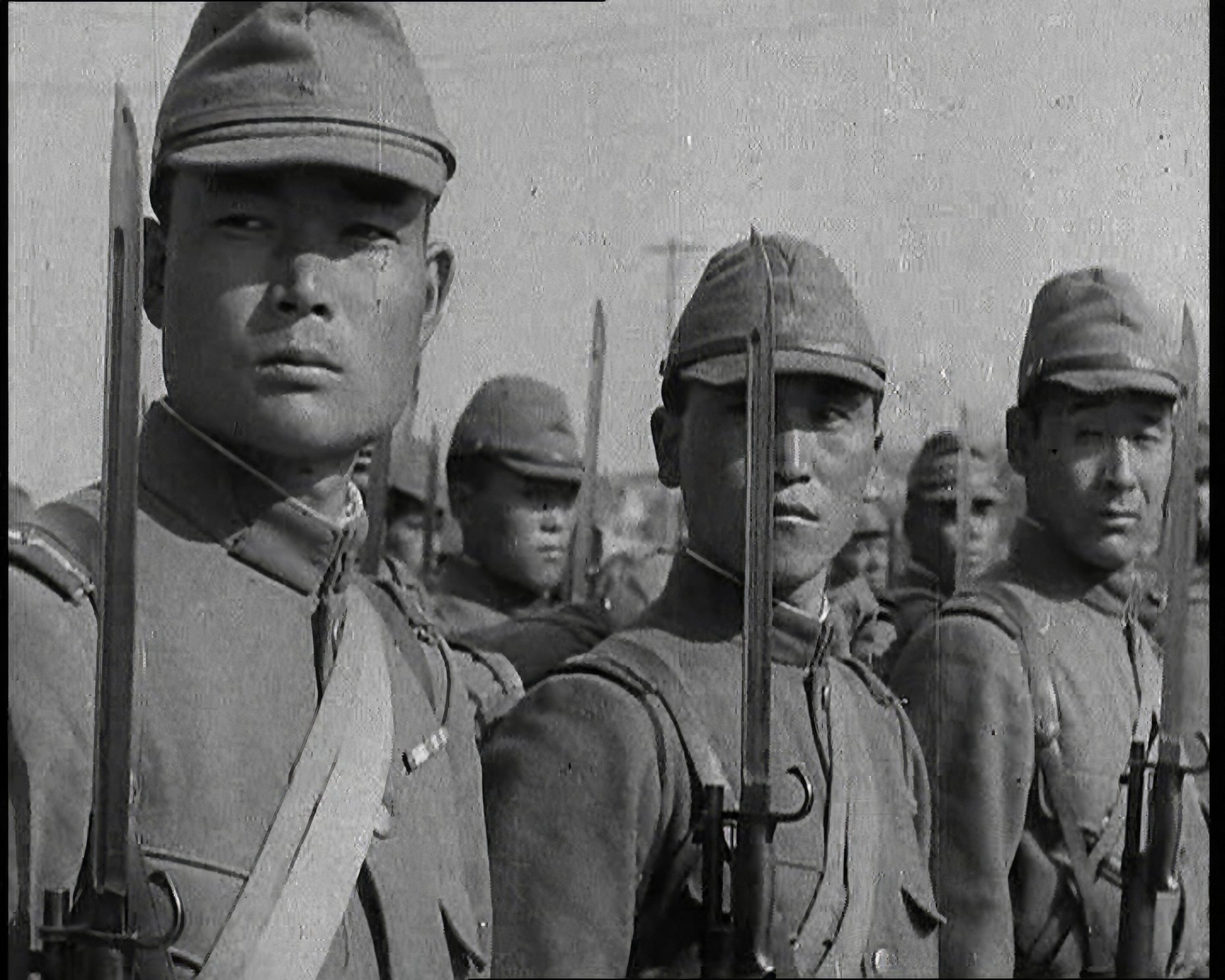
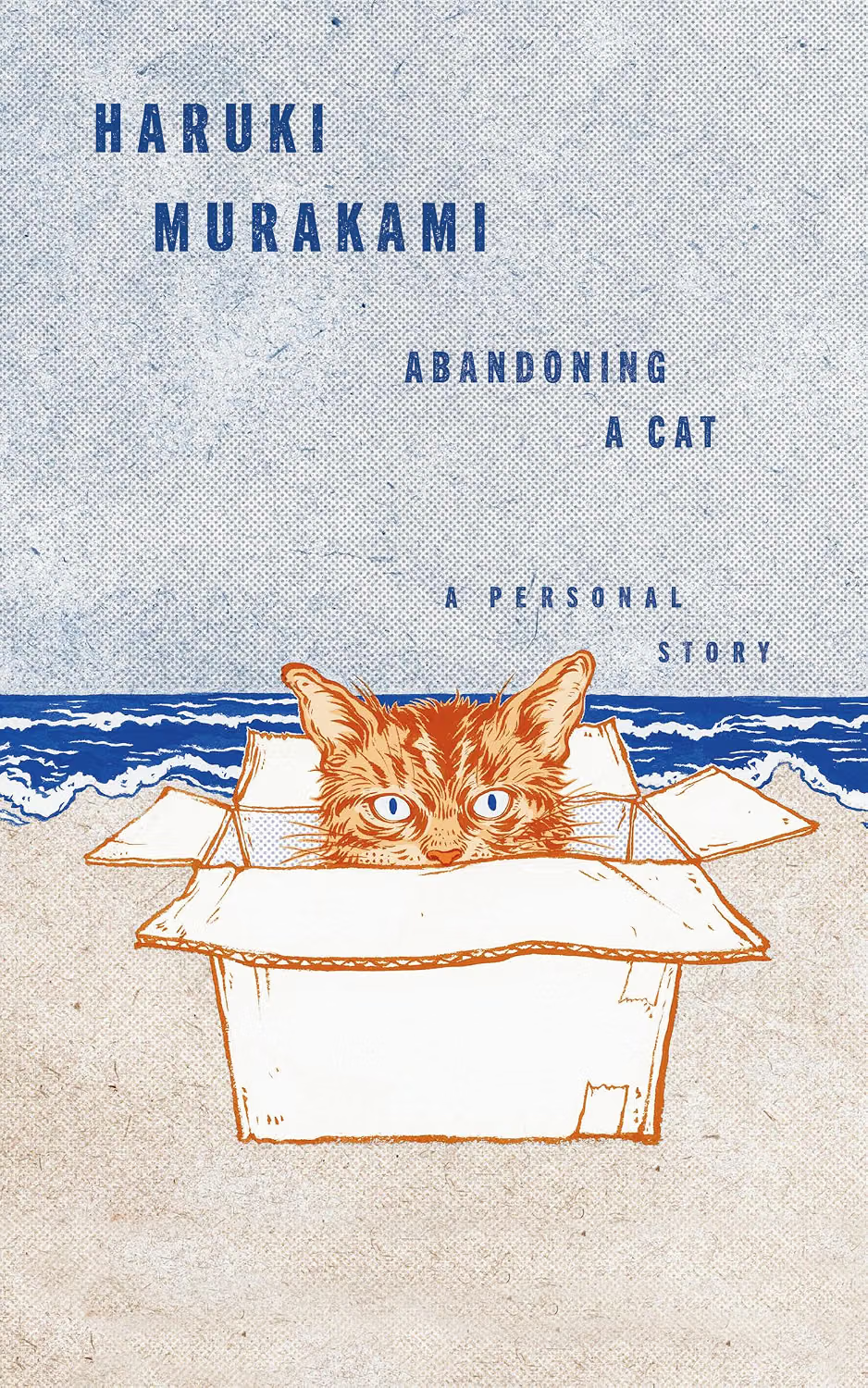
Murakami’s new book Abandoning a Cat: A Personal Story is a beautifully illustrated, 80-page personal essay about his father’s life. Translated by frequent Murakami collaborator Philip Gabriel, it appeared first in The New Yorker. Now, it does not surprise me that a family memoir would prove more relatable on a human level than, say, a 1,200-page novel about a feminist assassin fighting mysterious dwarves in an alternative version of 1984 Tokyo. I was nonetheless struck by the extent to which Murakami’s account of his father, a haiku poet from Kyoto whose training as a Buddhist priest was interrupted by his service in the Second Sino-Japanese War,◆A skirmish starts the Second Sino-Japanese War. resonated with my own family experience. It was the first time I experienced Murakami as a kindred spirit rather than a fascinating stranger.
Was this new feeling of affinity on a personal level the result of a remarkable coincidence in our respective family histories? I think not. Rather, Murakami uses his family’s story to illustrate his core insight: “All we can do is breathe the air of the period we live in, carry with us the special burdens of the time, and grow up within those confines.” Every reader can relate their own story to that broad principle. The book illuminates the truth that history is always a collection of indelible accidents. In the process, it exposes the secrets behind some famous Murakami magic tricks.
PART ONE – The Grandfathers
Early in Abandoning a Cat, Murakami presents his grandfather’s unexpected demise to underscore the precarious nature of history, the random choices Fate makes in sentencing some to death and offering reprieves to others. Benshiki Murakami, described by Murakami as an “open hearted man,” is rewarded for his service to a parishioner with a cruel fate. In 1958,◆Benshiki Murakami fatally hit by a train. he is improbably struck by a train in the chaos of a typhoon. Benshiki’s fate is random, tragic. But Murakami’s conclusion emphasizes that our human tendency is to view “things that came about through accident and happenstance as the sole possible reality.”
Reading this, I thought of my great-grandfather Douglas, whose story vividly illustrates the same principle through the opposite frame. In 1861, he enrolled in the Texas Infantry and set out to defend an indefensible national position. Known to family and friends as a kind and creative man, he was also a son of slaveholders and was fiercely committed to the right to keep some people in shackles. Douglas lacked the big-picture compassion of Murakami’s father, who told his young son that he prayed for the Chinese as well as the Japanese. Yet Douglas survived battle after battle. His younger brother contracted pneumonia in camp and died in 1863. His elder brother Rufus, Doug’s idol and commanding officer, insisted Douglas sit out the battle in which Rufus himself was killed. Douglas emerged unscathed from the Battle of Franklin,◆The Battle of Franklin, Tennessee sometimes called “the Gettysburg of the West,” in which the Army of Tennessee lost over 20 percent of its fighting force. After the war, his first wife and three children all died of different illnesses within a decade of the wedding. But Douglas remarried and plowed on until his 90th year, the same year that my father was born.
Murakami’s novel The Wind-Up Bird Chronicle presents a similarly improbable streak of wartime luck. In World War II Mongolia, Lieutenant Mamiya witnesses a killing so extreme it belongs to Murakami’s padded cell, not the factual precision demanded by the new memoir. A savage Soviet skins Mamiya’s commander alive, but he lets Mamiya live not once but twice. Mamiya is spared to live in traumatized safety, internally dead but externally alive. In the hands of Murakami the novelist, my great-grandfather’s survival would be a similar instance of magical realism. But I exist only because his story is true. Murakami the essayist artfully acknowledges the irony but shrugs. “That’s what history is,” he writes: “a single, unsparing reality born from countless possibilities.”
PART TWO – The Fathers
If Murakami’s grandfather and my great-grandfather lived stories that were meaningfully inverted, the fates of our fathers are full of parallels. His father was born in 1917,◆Haruki Murakami’s father is born. mine in 1931. Given that Murakami has 24 years on me, it seems remarkable to me that our fathers are separated by only 14 years. My dad was already 42 when I was born, continuing a family pattern of late parenthood. Consequently, our fathers are closer generationally than one would expect.
Murakami isn’t certain but he suspects that his father studied to inherit his grandfather’s Buddhist temple in the 1930s. As I mentioned in the introduction to this essay, my father was a Presbyterian minister in Paris, Missouri in the 1950s. My father’s seminary enrollment made him exempt from the draft during the Korean War. Murakami’s father’s studies should have afforded the same protection according to Japanese law, a four-year exemption from military service. Writes Murakami, “My father, however, forgot to take care of some administrative paperwork, and in 1938, when he was twenty, he was drafted.”
This tragic oversight has permanent psychological implications for Murakami’s father even though he survives his service. Instead of continuing his schoolwork and perfecting his passionate craft as a writer of haiku, Murakami’s father finds himself sending subtle expressions of heartbreak to his school’s haiku journal from China:
Birds migrating. Ah—
where they are headed
must be my homeland
My own father lived a kinder reality. As a classics major in the 1940s, he was runner-up in a poetry contest for a comic riff on Homer’s Iliad. It was glitteringly witty and rhymed with complex precision. My uncle still recites every word from memory. So does my dad, or most of it, despite the kind of softly debilitating memory loss that most men in their 90s would kill for. This is just the first stanza:
Sing, epic muse, Achilles’ blues, in language such as poets use,
And tell of the Achaeans’ war to conquer valiant Troy;
Ah, ’tis a noble history of bretheren and sistery
Of kingly rank and queenly (nor were any hoi polloi)
The contrast between my father’s words, sparkling as prettily as any that William Schwenck Gilbert ever wrote, and the pained restraint that Murakami’s father sent back from the front of the Second Sino-Japanese War speaks volumes about the accidents of history. My father had the luxury of finding the comic potential in war. Murakami’s father was living its tragic reality:
A soldier, yet a
priest clasping my hands in
prayer toward the moon
When Murakami is in elementary school, his father tells him a chilling tale about a Chinese prisoner who stonily accepted murder by Japanese sword. With the benefit of research and adult hindsight, Murakami asserts that the Japanese military deliberately forced their soldiers to commit such war crimes to “toughen them up and get them used to war.” Murakami’s father is so traumatized that he feels compelled to share an abbreviated version of the story with his child, ensuring that both men are traumatized for life.
Murakami’s trauma from his father’s wartime experience was secondhand and mild, but it colors his fiction. In Killing Commendatore, Murakami invents a pianist who slashes his gifted hands out of horror over having committed similar offenses against Chinese prisoners. The Wind-Up Bird Chronicle tells the story even more harrowingly, as a zookeeper is forced to watch a Japanese soldier unsuccessfully bludgeon a defenseless Chinese prisoner with a baseball bat. A wartime tragedy passed from father to son is refracted through the prism of Murakami’s magical realist fiction. “Realism is a lenient tutor; it schools its own truants,” wrote book critic James Wood. “Everything flows from the real, including the beautiful deformations of the real; it is realism that allows surrealism, magic realism, fantasy, dream, and so on.” By trying his hand at family memoir, Murakami is not just sharing family secrets. He is revealing the hidden deck of cards sewn into the sleeve of his famous magical realism.
Despite the trauma, Murakami recognizes his own good fortune. “If my father’s fate had changed by even a fraction,” writes Murakami in Abandoning a Cat, “the fact is I wouldn’t exist.”
PART THREE – The Sons
I discovered Haruki Murakami in July 2025. Since then, I have read 11 of his books. Until now, I had no idea how much we have in common.
It goes far beyond our mutual affection for cats, which are a constant presence both in Murakami’s fiction and in Abandoning a Cat. In Kafka on the Shore, the adorable Mr. Nakata makes a tidy side gig of chatting with friendly felines. I used to dream that mine conversed with me. The new book opens with a true story that reads like a tall tale. Murakami and his father bike to the Japanese coast and regretfully drop their cat from the family rolls. But when they get back to their home, the improbably tenacious feline is mewing contentedly on the steps. Streeeeeeeetch.
More substantively, Murakami and I were both underachievers in our school days. “I’m the type who eagerly pursues things I’m interested in but can’t be bothered with anything else,” he writes in Abandoning a Cat. “That was true of me when I was a student, and it is still true now.” Hello, fellow traveler. I started my schooling under the Montessori principle that children learn best when they are self-directed. My mother pulled me out of the Montessori school after fourth grade because I was more interested in writing my own Choose Your Own Adventure books than I was in fractions. In other words, books that offered, in Murakami’s words, “a single, unsparing reality born from countless possibilities.” My modest high school grades were exceeded substantially by the marks I received in college, where you get to pick a major (mine was theater), and where my interest in playwriting started belatedly teaching me the importance of science and math. Reading about those concepts in historical and narrative contexts in the works of Tom Stoppard and others began to influence the “things I was interested in.”
Finally, I have tried in this review to reflect in my own writing Murakami’s skill as a personal essayist. Despite his astounding modesty about his capacity for big-picture analysis (“by nature I’m totally inept at abstract or conceptual thinking”), Abandoning a Cat is a winning application of individual events to a universal and abstract scale. This is almost exactly the opposite of the skill that has secured his fiction millions of devoted fans. There, mundane realities are blown up into events of profound extremity: a Japanese soldier’s recollection of a defiant Chinese prisoner is transformed into an evocation of a blood-soaked Louisville Slugger, or a commanding officer painstakingly relieved of his skin. Here, international history is distilled into routine-but-eloquently-conveyed realities: a son who pays the price decades later for the cruelty of a government toward its courageous young recruits. The reason I can now locate ready commonalities with the story he tells in Abandoning a Cat is that, for once, he is not distancing me from reality with a whimsically surreal three-ring circus. The project of memoir is different, but he is just as skilled at this form of narrative. The proof is that I suddenly feel like the stranger who mystified me with Kafka-esque sleight of hand is now a friend with whom I can banter on an excursion to the vinyl store.
Murakami is a good writer not because he has suddenly discovered a premise with Batuman’s precision of setting, or a flesh-and-blood protagonist rendered with Robinson’s theological depth, or a Chekhovian mastery of humanity’s timeless ticktock. Murakami earns a special place on my shelves because he can trace the line from reality to magic and back again at the drop of a cat.