
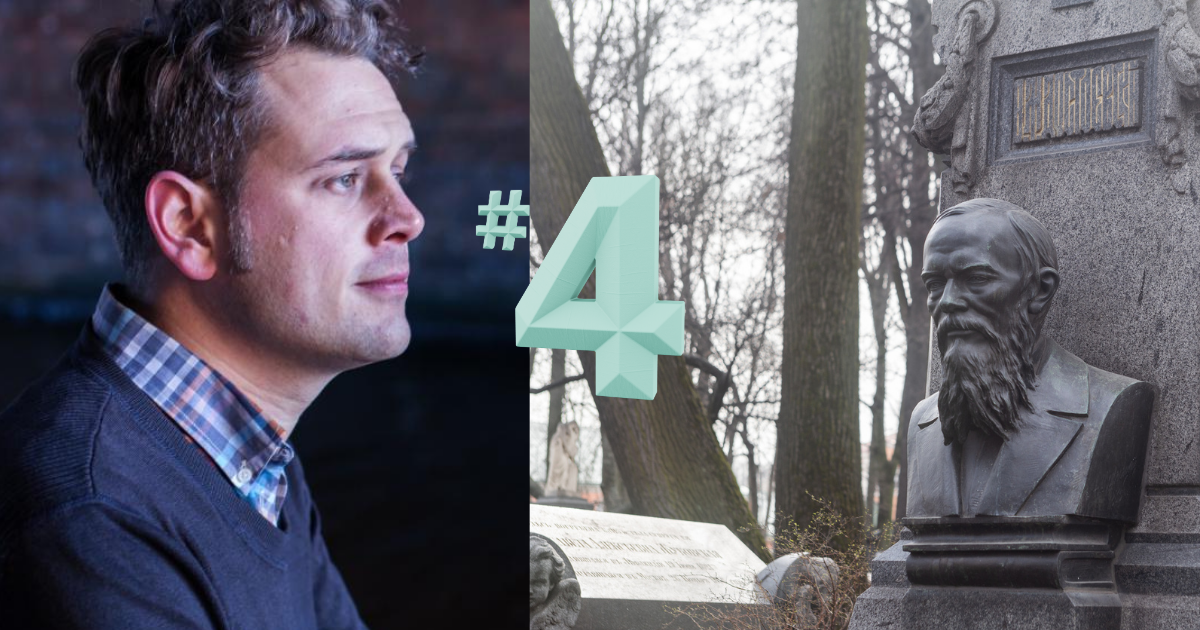
I ranked and reviewed each of the shortlisted novels. I also paired each novel with a classic. The winner of the 2026 Booker Prize was announced November 9, 2026 at 9:45 PM GMT. You can watch the recording of the ceremony at The Booker Prizes YouTube Channel.
Black Bag was neck-and-neck with The Things We Never Say until I re-read it. Now its swaggering thematic ambition as a comic novel of ideas places it firmly above Strout’s quiet, modest meditation on compassion.
The Oldest Trick in the Book
Stop me if you’ve heard this one. A novel or a play or a movie opens on a protagonist who is down on his or her luck. A crucial interview or audition or money-making scheme has the hero humming the “I Wish” Song from A Chorus Line (“I Hope I Get It”).
“I really need this job, Please God, I need this job…"
But the crucial interview or audition or money-making scheme ends in familiar rejection or failure (“I really blew it! How could I do a thing like that?”), casting our hero to a new low that leaves them susceptible to a preposterous opportunity.
If this sounds familiar, that’s because it is the opening scenario of Tootsie.
And The Merchant of Venice.
And Parasite, Indecent Proposal, Mrs. Doubtfire, The Caretaker, The Financial Lives of the Poets, The Pillowman, Emily the Criminal, Nights of Cabiria, Sweet Charity, The White Tiger, Squid Game, Death of a Salesman, Timon of Athens, and Pseudolus by Plautus, which was written in 191 BC.
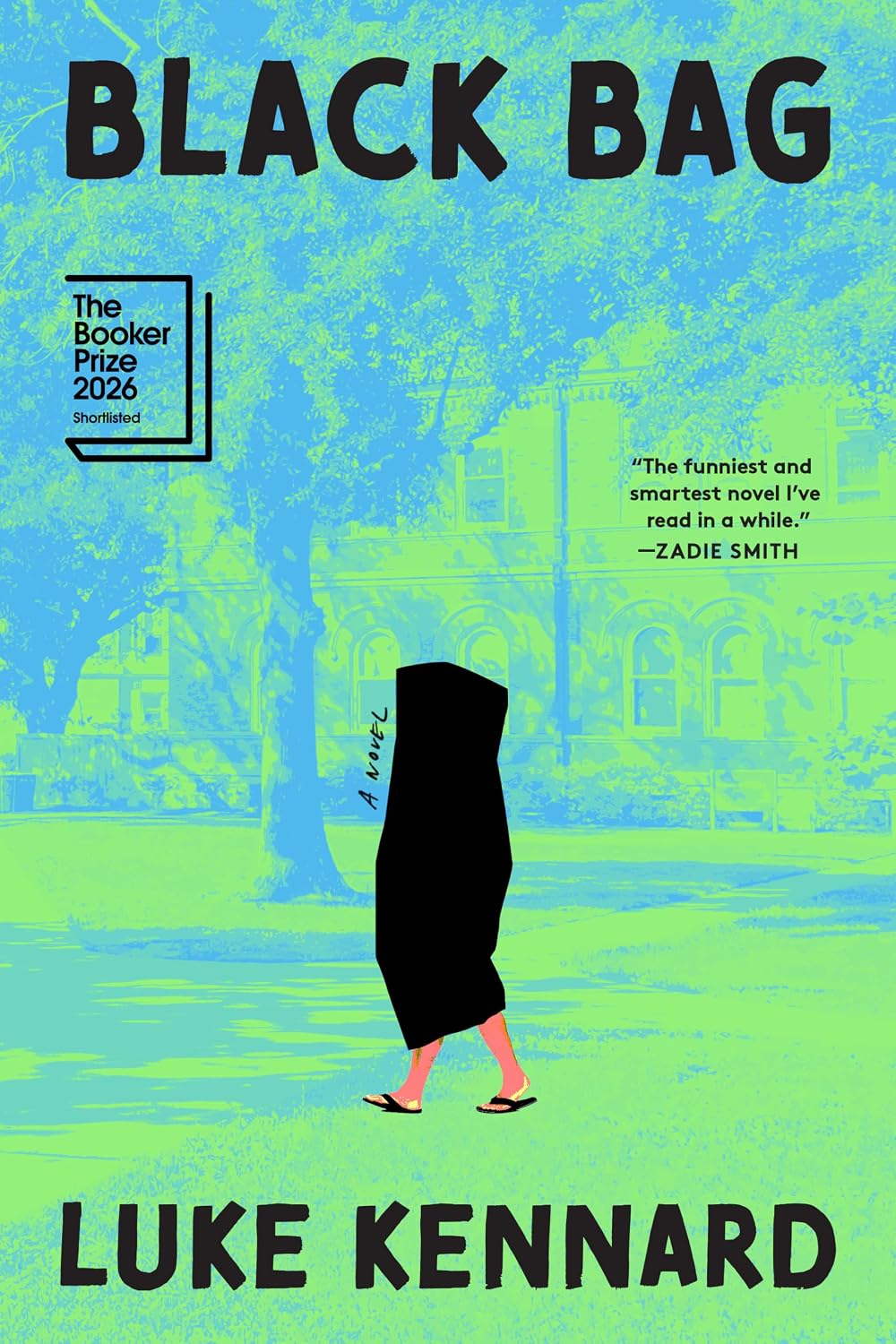
In Luke Kennard’s Booker Prize-shortlisted novel Black Bag, our hero is a gigging actor living on porridge and borlotti beans. The last straw is a humiliating flood improv at an audition for a polemic about climate change. (“So I suppose the real question is,” the fed-up protagonist muses, “If a theater was gradually filling with water, soon to drown us all, would you rather see this piece of shit or Hedda Gabler?”) Before you can say “paint by numbers,” our Gen X hero is horizontal on a classroom desk in an undergrad psych class, inexplicably clad in a black leather bag that extends from his calves to his scalp with openings in various places to facilitate daily living.
I had to read Black Bag twice before I realized the subversive intentionality behind that archetypal opening. The first time, I admired Kennard’s clever fictionalization of an Oregon State University study that found students shifting from hostility to affection toward a sack-clothed companion. I whistled along with his crackerjack comic execution, as when the innominate actor (often simply called “black bag”) suggests that dinner theater attracts the kind of people “who own paintings by Bob Dylan, as if that’s what Bob Dylan is for.” But I tended to find the structure yawningly conventional, the characterizations sitcom thin, and the thematic cogitations of male loneliness, creative frustration, and suburban alienation prosaically disjointed.
The second time, I realized that Kennard’s nods to formula were a disarming lullaby designed to magnify the wallop of impending experimentation. I came to see the stock typing of his characters as appropriate streamlining for a comic novel of ideas. Most importantly, I discovered a coherent argument advanced in almost every paragraph. Kennard’s depiction of cultural vacuity and artistic discontent, among other tertiary concepts, now served a narrative throughline about fragmented straight male identity. Masculinity had seemed a tasty-but-arbitrary slathering of intellectual icing atop a sugary comic cake; now it was the proteinaceous foundation for an ambitious entrée in which comedy is the piquant seasoning that makes a heady stew worth savoring.
Learning from the Master of Petersburg
I’ll forgive you if you think my argument in the preceding paragraph that Kennard deliberately watered down his character development and resorted to plot clichés in order “to magnify the wallop of impending experimentation” amounts to elaborate excuses made on behalf of a trifle I enjoyed. But if I’m right, the Booker candidate is standing on the shoulders of one of world literature’s giants.
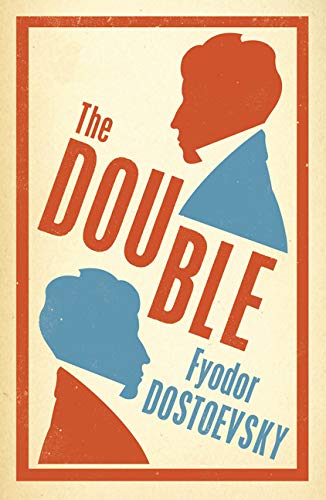
The Double by Fyodor Dostoevsky does not address male loneliness. They had a different name for that in 1846; it was called “loneliness.” Female loneliness was unavoidable, and it was called “The Woman Problem.”
In “The Double: Dostoevsky’s Self-Effacing Narrative,” a 1989 paper published in The Slavic and East European Journal, David Gasperetti recognized that the 19th-century Russian novelist, usually revered for the layered intensity of Planet Earth’s most psychological characterizations from Raskolnikov to Alyosha, laid the same neutralizing trap for readers in his 1846 novella The Double that Kennard set 180 years later in Black Bag. (Note that I have changed Gasperetti’s spelling of Dostoevsky’s name to the more familiar Romanized variation.)
Dostoevsky tempts readers to accept, as they have many times in the past, the sentimental evocation of sooty apartments, simple yet good-hearted petty bureaucrats, and social injustice as being a valid representation of Russian cultural reality. Once readers commit themselves to this familiar system of values, however, the author plays with it, distorts it, and eventually totally effaces it. No matter how accommodating we are as readers, no matter how hard we try, our attempts to make sense out of a hopeless situation will prove just as fruitless as [his character’s]. … Thus, readers are the real target of The Double. Seduced, betrayed, and abandoned by the text, we are made to seem just as nearsighted and deluded as Dostoevsky’s little clerk. David Gasperetti, “The Double: Dostoevsky’s Self-Effacing Narrative,” The Slavic and East European Journal (1989)
The 25-year-old Dostoevsky knowingly cribbed tropes that his peers had employed as lazy shorthand to acquaint the reader with a particular milieu. His characterization of his hero, Mr. Golyadkin, as an excitable little fellow “reinforces the social motif of the little person as victim of an insensitive and repressive society,” asserts Gasperetti. But once the reader is lulled into a false sense of security, Dostoevsky assaults them with fevered instability. Golyadkin is treated by a doctor who advises him to take social risks. Is the clerk mad? Walking home in Chapter 5, the fretful nebbish is convinced he is being pursued by an uncanny doppelganger. Is it actually happening or a paranoid vision? In a novel, is that a meaningful distinction so long as no one wakes up next to Ray Bolger?
To be clear, Kennard’s use of this technique has distinctly dissimilar aims. Dostoevsky is creating an absurdly unreliable satiric nightmare that draws from the weird comic style of his contemporary Nikolai Gogol (Dead Souls, The Nose). In so doing, he anticipates the unstable fever dreams of Franz Kafka, who won’t be born for almost 40 years. The novella asks where sanity ends and madness begins. There are no madmen in Black Bag, and the narrator is scrupulously reliable. He even tells us so in paragraph one: “If you met anyone as whiny, as disobliging and egocentric as the average narrator of a novel in real life you’d find them unbearable. … I’m not like that. I love life. I love being alive.”
But these two works have more in common than narrative strategy. Like The Double, Black Bag eschews Chekhovian real-world specificity. Its colors are bold, its style heightened. Black bag lives in our world to the same extent as do Michael Scott from The Office or George Costanza in Seinfeld. But in Chapter 73, Kennard’s faithful tether to reality snaps in decidedly Dostoevskian fashion.
At the supermarket, our black bag encounters a second anonymous stranger wearing a black bag! “Is this how it feels to look at me? I feel an actual sense of revulsion.” Kennard’s dialogue eschews quotation marks as if they establish unwelcome psychic borders.
For goodness’ sake, I say to black bag. Why are you running away from me?
Why are you chasing me?
Black bag has a reedy, male voice.
Who are you?
Black bag says nothing.
Why are you doing this?
Black bag says nothing but crumples slightly.
I try to think of how I’ve felt when people question me impertinently, how badly it reflects on them.
Why does everyone hate me? he says, quietly. Luke Kennard, Black Bag
Black bag’s first exchange with his doppelganger bears a distinct tonal resemblance to Golyadkin’s first exchange with his.
“Excuse me,” began Mr Golyadkin, “for… incidentally, permit me to learn what I should call you?” “I… I… Yakov Petrovich,” his guest all but whispered, as though conscience-stricken and ashamed, as though begging forgiveness for the fact that he was called Yakov Petrovich too.
“Yakov Petrovich!” our hero repeated, powerless to conceal his embarrassment.
“Yes, sir, exactly so, sir… Your namesake, sir,” replied Mr Golyadkin’s meek guest, taking the liberty of smiling and saying something a little light-hearted. Fyodor Dostoevsky, The Double
Character Actor
If Kennard is not probing the boundaries of sanity, what is his odd tale after? At first, the novel centers on questions of identity. The black bag is an effacement of self, and it appeals to our actor more than most because he has always been more comfortable occupying strangers onstage than being himself. “For fifteen years I have dedicated myself to becoming a character actor,” he admits. The black bag subsumes his identity, and he feels liberated. It is a mask that gives him unprecedented confidence.
I have stubbornly committed myself to an art and vocation with no future and precious little present, rather than training as an accountant or a stockbroker or maybe a lawyer. And out of what? Sheer perversity of spirit, encouragement at an impressionable moment (the nineties), and, by this point, sunk cost fallacy. Black bag in Luke Kennard’s Black Bag
In the nineties, I was exactly that sort of actor. The kind who was facile with accents, who felt awkward using his own voice, whose market value was considerably higher in educational theater, where the old had to be portrayed by the young, than in the professional world, where David Mamet insisted that “nobody cares what you, the actor feel. You are expected to do your job, which is to show up and say the lines.”
The summer after graduation, I fulfilled a longtime dream by enrolling in an improv class at Chicago’s ImprovOlympic, which at that time had surpassed the better-known Second City as the top exporter of talent to Saturday Night Live. The entry level course was taught by Charna Halpern herself, the venue’s manager and a national powerbroker in pro comedy who had championed Mike Myers, Andy Richter, and Chris Farley. As the co-leader of my college’s improv team, I had read her book and taught its longform principles to my shortform peers.
As a student, I was oppressively shy offstage but a daredevil under the lights. But that was in a tiny evangelical pond. At a legendary institution around the corner from Wrigley Field, the recluse kept trying to shush the daredevil. Charna paid little attention to my efforts. Once, after playing a passenger on a plummeting plane, I recall her telling me, “You did a nice job playing against your fear.”
But one day, Charna led an exercise in which we were required to wear masks. With my face concealed, I became a crotch-grabbing tough guy onstage. My transformation perfectly embodied Charna’s thesis that masks free performers from inhibition. She was thrilled. I left the stage panting and settled into a customarily distant seat. “You must have had your Wheaties today,” an extroverted classmate intoned with unmistakable condescension.
“Why don’t you sit over here,” asked my legendary teacher.
Charna was chummy that entire morning. My tongue was suddenly thick, and my brain torpid. In the scene with the powerful mentor, was I supposed to play the shy kid? Or the crotch-grabbing tough guy?
Maybe it’s not about your lack of identity, [Justine] says. Maybe it’s actually quite the opposite. Maybe it’s something about you.
Me?
Something about the kind of person who would even be capable of what you’re doing. Black bag and his feminist lover in Luke Kennard’s Black Bag
Three Men and a Bag
They’re men, [Justine] says. Caught between thousands of years of abusing their power and a reckoning they bitterly resent and at the same time feel they fully deserve. Makes them a bit fucked up.
It does make us a bit fucked up, I say.
Luke Kennard, Black Bag
In a way, the line between tough guy and nonentity is the subject of Black Bag. A few decades into second-wave feminist ideals, and a few years into #MeToo consequences, straight male culture has lost its moorings.
Women can be breadwinners, guys can wear skirts, gay men can be warriors, boys can cry, and strength is not incompatible with empathetic intellectual precision. What’s a guy to do?
It sometimes feels like we only have two choices. Either we double down on atavistic Trump-Vance toxicity, or we submit to a penitent vacuity in which everything we leaned on for self-definition has been eviscerated by the righteous backlash against our inflated valuation of power, aggression, and emotional rigidity. Step this way and face justified hostility at your caveman obsolescence. Step the other way and maleness is subsumed in perceived femininity.
Option Alpha
The narrator’s video-game playing bestie Claudio is goodhearted, but his constant impulse to monetize lies just this side of toxic. “Thing is, homes, men aren’t even reading novels anymore. To be honest I’d respect them less if they did.” When black bag objects, Claudio doubles down. “The men who read novels are the same men who bewail the lost art of dressing for dinner. … Harris tweed with a copy of Candide sewn into the left pocket. … Protruding just so.”
These days, straight male sexuality often reads as obnoxious and dangerous in a novel. John Updike, Haruki Murakami, Philip Roth, Milan Kundera. In some ways the sexual passages of their books do not age well.
In Black Bag, Luke Kennard gets away with his graphic het sex scenes by putting a strong, three-dimensional woman firmly in charge. Justine, a sexually daring feminist professor who has initiated a sexual relationship with black bag, keeps phoning him to tell him about encounters with other men. One of them, a pastry chef with a reddish handkerchief around his neck, is a classic alpha male.
He leans down and kisses me. I don’t know if you’ve kissed someone with a beard before.
Once. Bristly.
But his beard is soft, like a bearskin rug or something. It’s nice.
That does sound nice. How does he kiss you?
Forcefully.
Mm. …
And his hand is still between my legs, but that’s not what I want, so I grab his arm and I pull it away, and he holds his hand up, like, I yield! And he leaves his hand up when I let go of his wrist.
Luke Kennard, Black Bag
The chef soon finds Justine in command of his organ, his orgasm, and its consequences. She might sully his cakes; she hasn’t decided. The boldest lady’s man in the book has utterly lost control of the narrative.
Option Beta
If the chef is the confident male ego steering its id, the narrator is a weak-willed superego. The only thing she can tell through the mask of the black bag is that he is “Caucasian and possibly male.”
“We’re quite generic,” he tells her.
Justine blueprints each of their trysts, and he obsequiously obeys.
The novel’s climax follows several chapters of ennui and evaporating narration. Black bag has lost every social connection in his life, and he ultimately finds himself at sea in the needy, caustic anonymity of social media. While this is conceptually ingenious, the problem for the reader is that it is as dramatically dull on the page as it is in real life. Kennard aims for page-turning suspense, but while we do flip rapidly through the last quarter to see how the story ends, the content whizzes by blandly like suburban franchises on the average American interstate.
The writing recovers its snappy specificity in a pseudo-religious climax that serves penitent straight men the way the Promise Keepers serve faithy alphas. I will not reveal what happens at that gathering, but let’s just say it is The Double on steroids.
Option Gamma
Black Bag has too many denouements, as moving as many of them are, but my favorite is the one that casts the nearly genderless generosity of the professor who initiated the black bag experiment in the first place. Dr. Blend, the quintessential Compassionate Man, is adrift and insolvent. Tenured stability is a thing of the past, and he lives in perpetual adjunct poverty.
But despite his unhappiness, Dr. Blend is the blend of Option Alpha and Option Beta that Kennard settles on as his ideal. The genuine intellectual, the book argues, does not lose his Self in abased apology for male misbehavior. Nor does he indulge in regressive toxicity. He is untouched by this drama because he never thought gender distinctions were meaningful in the first place.
I can see no evidence of a current or former partner, photos of grown-up children, suggestions of combined preference or compromise, but even the formulation that runs through my head—I can see no evidence—annoys me. I also see no dog chews or scratching posts. Isn’t it, in fact, the height of rudeness—and isn’t rudeness just the dull, persistent, everyday manifestation of cruelty—to be curious about anyone else’s personal arrangements that they’ve not actively volunteered to you? To be always trying to work people out like a dismal magazine journalist. Lord spare us all from such barbarism. There is a good and a bad curiosity to entertain about the lives of others, and time and again it feels like we’ve chosen the bad. Black bag will draw a close to this entire way of life. Luke Kennard, Black Bag
I am improvising for a VHS camera. A friend and I are enacting a satirical television commercial mocking the U.S. Military’s “Don’t Ask, Don’t Tell” policy that allowed gays to serve provided they hid behind an androgenizing black bag. I am playing the gay service member. Ever the character actor, I let flashes of an inner sassy lady color my performance.
An extroverted straight friend yells “Cut!” Indignant at the notion that a gay character must necessarily exhibit flashes of an inner sassy lady, he demands we start over. Gay people are just like straight people!
We regroup, reshoot. Ever the character actor, I am utterly wooden in the role of Myself.
So miscast.
| 6th Place | |
|---|---|
| Contestant | The End of Everything by M. John Harrison |
| My Review | Imprecise Peculiarity and Painstaking Banality at The End of Everything |
| Summary | I enjoyed Harrison’s indulgent weirdness at times, but I wondered why he seemed to conceal his freak flag while rambling on ad nauseum about modern suburban settings. |
| Classic Pairing | The Hitchhiker’s Guide to the Galaxy by Douglas Adams |
| Why | Tonally miles apart, but both create apocalyptic futures with aliens who flippantly offer replacements for our core humanity. |
| 5th Place | |
| Contestant | The Things We Never Say by Elizabeth Strout |
| My Review | Elizabeth Strout Tries the Patience of a Saint |
| Summary | Bold in its politics but mild in its artistic ambition. |
| Classic Pairing | Middlemarch by George Eliot |
| Why | Both present their protagonists as everyday saints and use recent political events as backdrops. Both divided readers along generational lines. |
| 4th Place | |
| Contestant | Black Bag by Luke Kennard |
| My Review | The Alphas, Betas, and Gammas of Masculinity in Black Bag |
| Summary | Every hilarious page serves its narrative throughline about what has become of straight male identity in the wake of feminist reckonings. |
| Classic Pairing | The Double by Fyodor Dostoevsky |
| Why | Kennard’s story begins to realize its surreal potential when Black Bag chases down his Double. The authors both cozy the reader with familiarity before things get weird. |
| 3rd Place | |
| Contestant | May We Feed the King by Rebecca Perry |
| My Review | The Poet as Novelist and Historian in May We Feed the King |
| Summary | The first novel by an experienced poet has an evocative core but an uneven historiological frame. |
| Classic Pairing | Memories of the Ford Administration by John Updike |
| Why | The parallels between Perry’s hated monarch and Updike’s reconstruction of James Buchanan, by consensus the worst president in U.S. history, illuminate May We Feed the King in numerous ways. |
| 2nd Place | |
| Contestant | The Disappearers by Marlon James |
| My Review | Is The Disappearers the Beloved of the Gay Experience? |
| Summary | Marlon James's voice is distinctively and historically queer in its quicksilver wit, its showy intellect, and its unfailingly compassionate resilience. It flies defiantly against unremitting gales of bigotry, in unflinching affirmation of a people who refuse to spend another day hiding from themselves. |
| Classic Pairing | Beloved by Toni Morrison |
| Why | Beloved is as close as Morrison comes to a definitive statement on slavery, which haunts all of her works. The Disappearers is a comprehensive exploration of the gay experience in homophobic Jamaica. Beloved is the fullest realization of Toni Morrison’s life’s work and the lasting community touchstone that Marlon James is reaching for. |
| 1st Place | |
| Contestant | John of John by Douglas Stuart |
| My Review | Staying is The Longest Journey |
| Summary | In sheer wattage per page, Douglas Stuart’s richly textured, deeply pained, and inerrantly true novel was the most moving and wryly satisfying book of the year. |
| Classic Pairing | The Longest Journey by E.M. Forster |
| Why | The fulfilling acceptance Rickie finds at Cambridge, and his growing skill as a writer, are the stakes of Cal’s sacrificial return to the island. Rickie’s misfit marriage and sham teaching job at Sawston are the island he must leave. And in standing up for himself against Pembroke, Stephen is Innes escaping at last. |